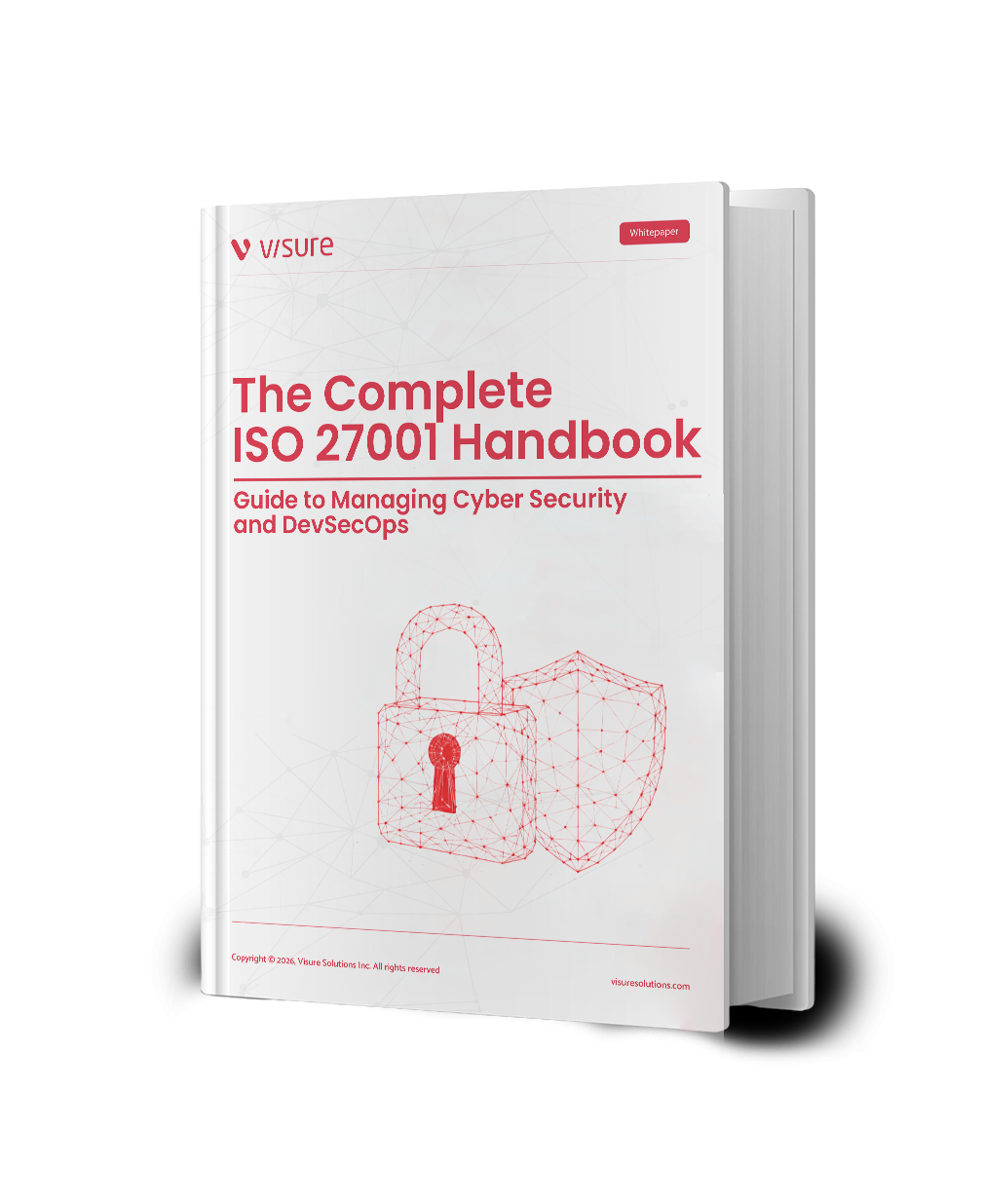
In today’s hyperconnected digital landscape, cybersecurity, data protection, and regulatory compliance are critical business imperatives. Organizations managing sensitive information across cloud platforms, software systems, and global supply chains must protect their assets against evolving cyber threats while enabling rapid and secure software delivery. The ISO 27001 Handbook provides a comprehensive guide to managing information security effectively while aligning cybersecurity governance with modern DevSecOps practices.
What is ISO 27001 and Why It Matters
ISO/IEC 27001 is the internationally recognized standard for establishing, implementing, maintaining, and continually improving an Information Security Management System (ISMS). It provides a risk-based framework for protecting confidential, sensitive, and business-critical information across people, processes, and technology.
Compliance with ISO 27001 enables organizations to:
- Establish a compliant and auditable information security management system
- Identify, assess, and mitigate cybersecurity risks
- Protect data confidentiality, integrity, and availability
- Meet regulatory, customer, and certification requirements
- Align security governance with DevSecOps and secure software development
Objectives of the ISO 27001 Handbook
This handbook is designed for CISOs, security leaders, DevSecOps teams, compliance managers, and regulated organizations. It delivers practical guidance for implementing ISO 27001 efficiently while embedding security across the software and systems lifecycle.
Step-by-Step Guidance for ISO 27001 Implementation
Learn how to define ISMS scope, perform risk assessments, select security controls, and maintain compliance across organizational processes and systems.
Best Practices for Risk Management, Controls, and Traceability
Understand how to manage information security risks, implement Annex A controls, and maintain traceability between policies, risks, requirements, and verification activities.
Integration with DevSecOps and Secure Development Practices
Explore how ISO 27001 aligns with DevSecOps, CI/CD pipelines, secure coding practices, and continuous security monitoring.
Tools and Software Solutions for ISO 27001 Compliance
Discover modern ISMS, requirements, and ALM tools that streamline audits, improve collaboration, and support continuous compliance.
This Whitepaper Will Explore:
The ISO 27001 Handbook provides a complete roadmap for managing cybersecurity and DevSecOps, covering:
- Core Principles of ISO 27001: Understanding ISMS requirements and information security objectives
- Cyber Risk Assessment and Treatment: Identifying threats, vulnerabilities, and mitigation strategies
- Annex A Security Controls: Implementing technical, organizational, and operational controls
- Security Across the SDLC: Embedding security into development, deployment, and operations
- Traceability and Compliance Documentation: Linking risks, controls, requirements, and evidence
- Digital Tools and Automation: Streamlining ISMS management, audits, and continuous compliance
- Benefits of ISO 27001 Compliance
Implementing ISO 27001 standards provides organizations with:
- Stronger cybersecurity and risk management posture
- Improved visibility and end-to-end traceability
- Faster audits and certification readiness
- Reduced security incidents and operational risk
- Increased customer trust and regulatory confidence
The ISO 27001 Handbook is your definitive guide to managing cybersecurity and DevSecOps with confidence. By adopting ISO 27001 best practices, embedding security across the development lifecycle, and leveraging digital tools for traceability and automation, organizations can achieve compliance, reduce cyber risk, and build resilient, secure systems in an increasingly complex threat environment.