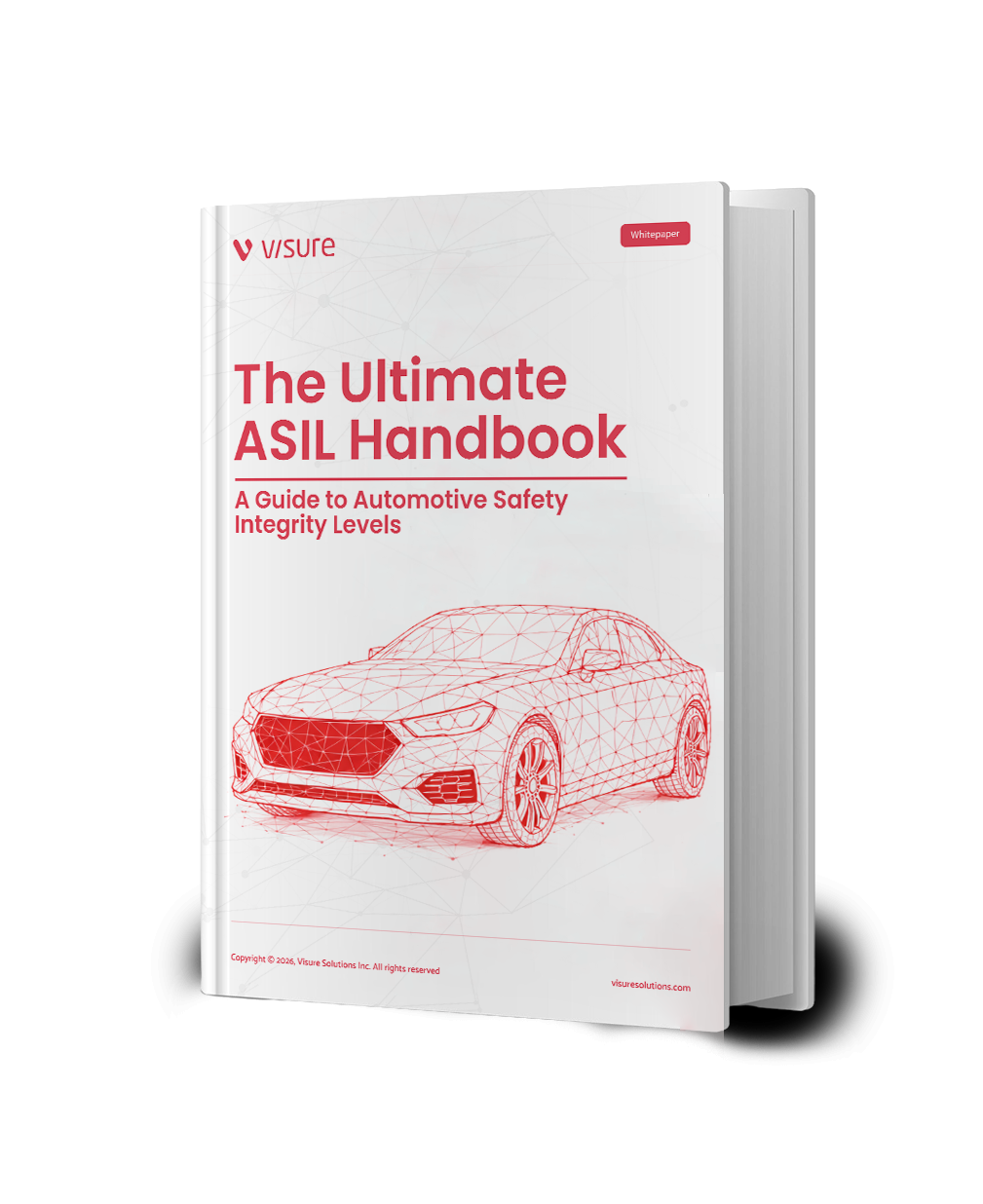
As vehicles become increasingly software-defined, connected, and autonomous, ensuring functional safety has become a top priority for automotive manufacturers and suppliers. Safety-critical systems such as ADAS, autonomous driving functions, powertrain, and braking systems must be designed to prevent unreasonable risk to drivers, passengers, and pedestrians. The Ultimate ASIL Handbook provides a comprehensive guide to understanding and applying Automotive Safety Integrity Levels (ASILs) as defined by ISO 26262.
What Are Automotive Safety Integrity Levels (ASIL) and Why They Matter
Automotive Safety Integrity Levels (ASIL) are risk classification levels defined by ISO 26262 to specify the degree of rigor required for functional safety measures in automotive systems. ASILs, ranging from ASIL A to ASIL D, are determined based on the severity, exposure, and controllability of potential hazards.
Applying ASILs correctly enables organizations to:
- Classify and prioritize safety risks in automotive systems
- Define appropriate safety requirements and development rigor
- Ensure compliance with ISO 26262 functional safety standards
- Implement structured requirements engineering and traceability
Objectives of the Ultimate ASIL Handbook
This handbook is designed for automotive engineers, functional safety managers, system architects, quality teams, and compliance professionals. It delivers practical, step-by-step guidance for interpreting ASIL requirements and applying them consistently across automotive development programs.
Step-by-Step Guidance for ASIL Determination
Learn how to perform Hazard Analysis and Risk Assessment (HARA) and assign ASILs accurately based on severity, exposure, and controllability.
Best Practices for Safety Requirements and Traceability
Understand how to define, allocate, and trace safety requirements across system, hardware, and software levels to ensure full requirements lifecycle coverage.
Integration with Functional Safety and Automotive Standards
Explore how ASILs integrate with ISO 26262, ASPICE, and automotive development workflows for a unified safety approach.
Tools and Software Solutions for ASIL Management
Discover modern functional safety and requirements management tools that streamline ASIL classification, documentation, and compliance.
This Whitepaper Will Explore:
The Ultimate ASIL Handbook provides a complete roadmap for managing Automotive Safety Integrity Levels, including:
- Core Principles of ASIL: Understanding ASIL levels, decomposition, and compliance objectives
- Hazard Analysis and Risk Assessment (HARA): Identifying hazards and determining ASIL ratings
- Safety Requirements Engineering: Defining and tracing ASIL-derived safety requirements
- Verification, Validation, and Confirmation Measures: Ensuring ASIL compliance is achieved and demonstrated
- Lifecycle Management of ASIL Requirements: Managing safety requirements from concept to production
- Tool Support and Automation: Improving efficiency, traceability, and audit readiness
Benefits of Effective ASIL Management
Implementing structured ASIL processes enables organizations to:
- Reduce functional safety risks in automotive systems
- Ensure compliance with ISO 26262 requirements
- Improve requirements traceability and lifecycle visibility
- Accelerate certification and reduce development rework
The Ultimate ASIL Handbook is your definitive guide to Automotive Safety Integrity Levels and functional safety compliance. By understanding ASIL principles, applying best practices, and maintaining robust requirements lifecycle management, automotive organizations can deliver safer vehicles, reduce risk, and achieve ISO 26262 compliance with confidence.