
- Whitepaper
The Complete ALM-PLM Integration Handbook
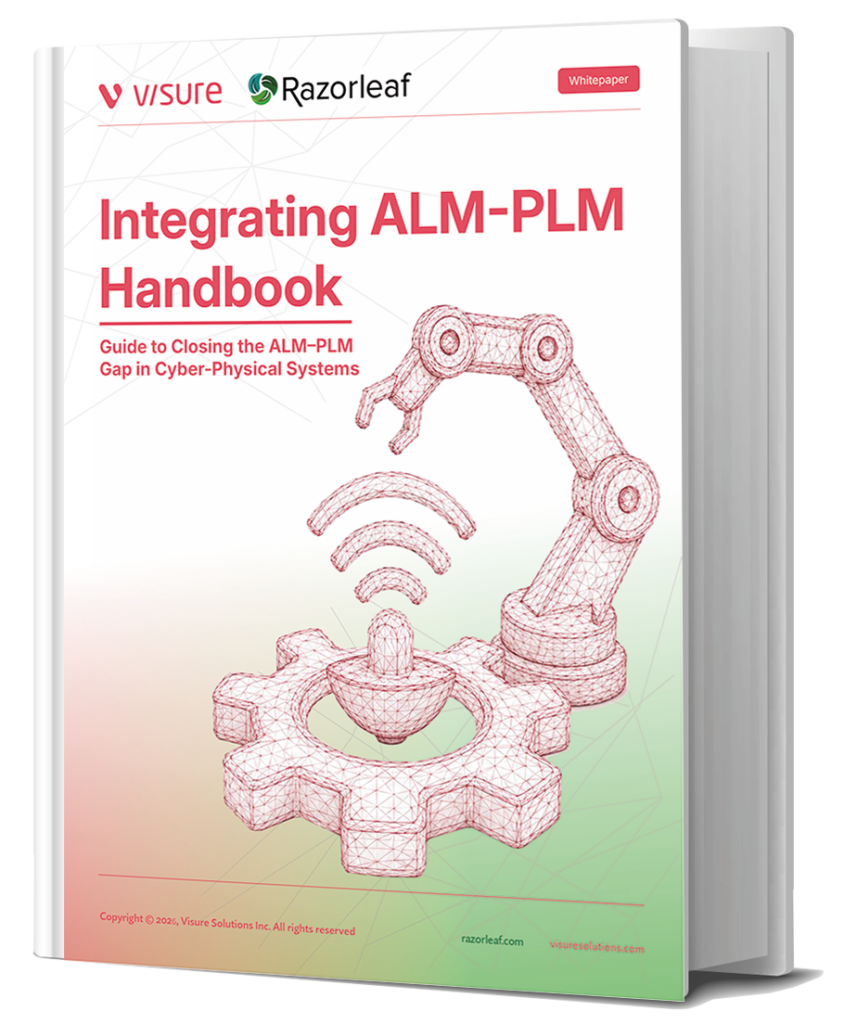
Download Resource Now!
What You'll Learn
How to Close the Gap Between Software and Hardware Engineering?
The cyber-physical systems that define modern engineering, autonomous vehicles, next-generation aircraft, software-defined medical devices, connected industrial machinery, cannot be built with disconnected tools and disconnected teams. The hardware-software gap is not a new observation. What is new is the cost of leaving it unaddressed: the compliance environments are more demanding, the product complexity is higher, the change velocity is faster, and the competitive pressure is more intense.
This whitepaper will explore:
- Understand how disconnected systems impact end-to-end traceability, compliance, and engineering collaboration across teams.
- Explore ALM-led, PLM-led, MBSE-federated, and hybrid integration models designed specifically for regulated industries.
- Implement proven lifecycle governance, configuration management, and digital thread strategies with SBOM integration.
Explore More
Explore Related Resources
- Article
What is the Difference Between ALM and PLM?
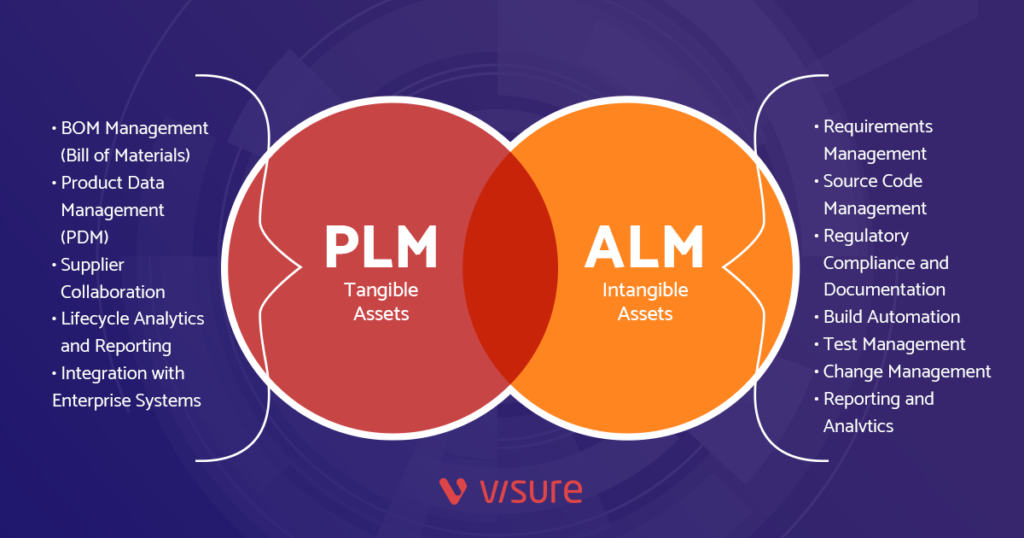
An architectural comparison of Application Lifecycle Management and Product Lifecycle Management, highlighting their distinct cadences, data models, and integration points.
- Webinar
Closing the ALM–PLM Gap in Cyber-Physical Systems with AI and Systems Thinking
An expert session on applying systems engineering principles, Model Context Protocol (MCP), and AI agents to connect hardware and software lifecycles.
- Guide
The Ultimate Product Lifecycle Management (PLM) Guide
A comprehensive hub covering PLM fundamentals, PDM-ALM synchronization, change management, and configuration control across modern engineering organizations.
Ready to Close the Software-Hardware Engineering Gap?
Unify your ALM and PLM environments to enforce full compliance and accelerate product timelines — start a free trial or watch a live demo of it in action.
FAQ
The ALM-PLM Integration Handbook FAQs
Can’t find an answer? Contact our team →
The gap stems from structural differences between hardware and software engineering. They operate on different development rhythms, change costs, and testing methods, creating disconnected silos when their specialized tools are not intentionally linked.
Unconnected systems lead to cross-domain change mismatches, traceability breaks during compliance audits, configuration failures, and schedule delays. These issues increase rework costs and heighten regulatory risks in safety-critical product lines.
An ALM-Led integration pattern works best. The ALM system serves as the central anchor for system requirements and traceability, pushing hardware specifications to the PLM while maintaining software compliance evidence.
AI and Model Context Protocol (MCP) streamline integration by identifying traceability relationships, detecting dataset gaps, and orchestrating workflows. They augment analysis while human oversight ensures deterministic compliance and governance.