
- Whitepaper
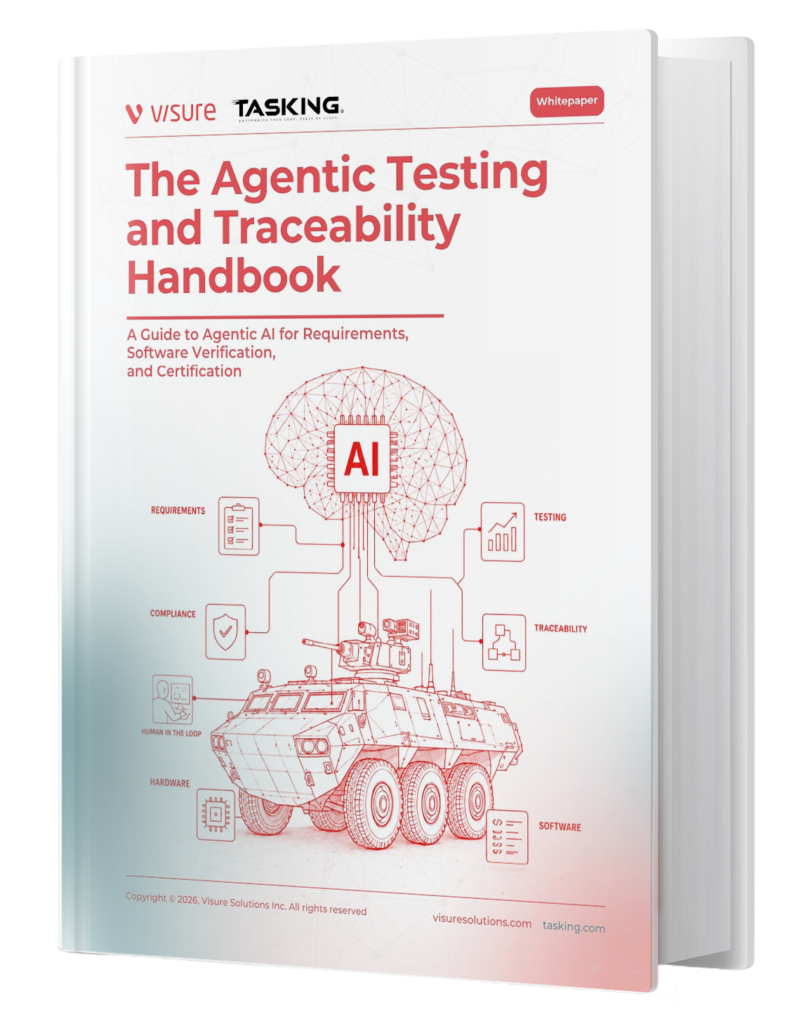
The Agentic Testing & Traceability Handbook
Learn how to use Agentic AI for Requirements, Software Verification, and Certification.
Talk to Our Testing Team
What You'll Learn
Leveraging Agentic AI for Requirements, Verification, and Certification
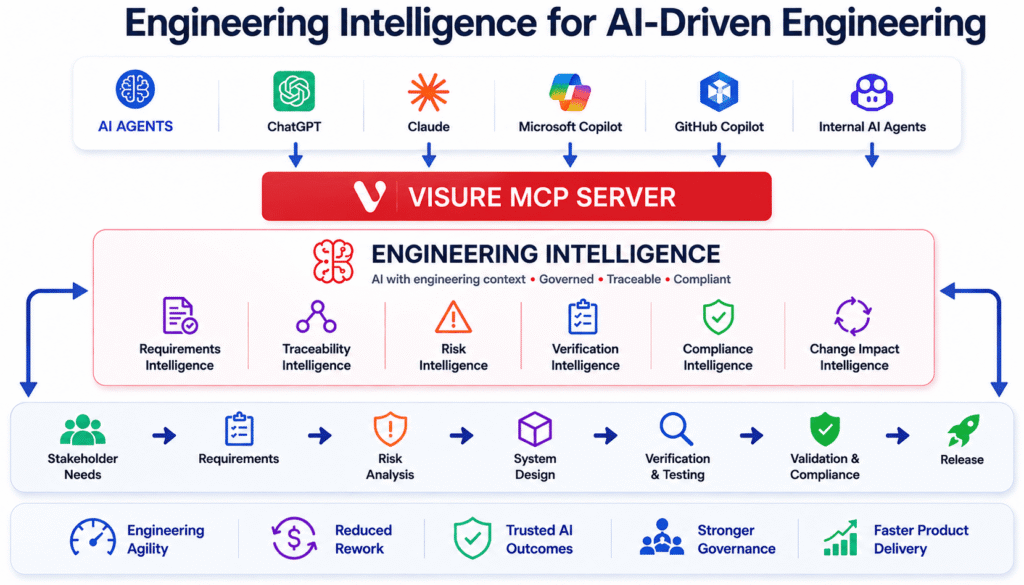
Agentic AI refers to an AI system that doesn’t just respond to a single prompt with a single answer, but can take a goal, break it into steps, call tools to retrieve or change information, and carry a task through to completion, with a person checking the result at the right points.
Core principles that distinguish a genuinely agentic workflow from a simple AI chatbot:
- It connects to live engineering data, not just the text typed into a chat window
- It can take multiple steps toward a goal without a person re-prompting it at every stage
- It can call tools (test runners, requirements platforms, version control) as part of completing a task
- It still requires a human decision point before anything it produces becomes part of the official record
Explore More
Explore Related Resources
- Whitepaper
The Ultimate Guide to Requirements Management
- Webinar
AI-Powered Verification & Validation
Walk away knowing how to automate verification tasks, ensure end-to-end traceability, and accelerate compliance with DO-178C, ISO 26262, and IEC 62304 using AI.
- Guide
Verification and Validation in Software Testing
Highlighting the importance of requirements validation and how organizations worldwide leverage verification and validation services to deliver high-quality systems.
See Agentic AI in Action for Requirements, Verification & Traceability
Accelerate compliance, automate verification workflows, and maintain end-to-end traceability with autonomous AI agents built for safety-critical systems. Start your free trial or watch a live demo today.
FAQ
Agentic Testing & Traceability FAQs
Can’t find an answer? Contact our team →
Unlike basic AI chatbots that simply answer isolated prompts or generate static text, Agentic AI operates autonomously within live engineering environments. It can break high-level goals into execution steps, call external engineering tools (such as requirement managers, test execution engines, and version control systems), and manage complex workflows independently, all while keeping humans in the loop for final approval and compliance certification.
Agentic AI accelerates compliance by automatically mapping end-to-end traceability between requirements, test cases, and code changes. It reduces manual verification overhead, ensures complete audit trails, and flags trace gaps or quality defects early in the lifecycle, drastically cutting time spent preparing for regulatory audits.
No. Core agentic principles enforce a strict human-in-the-loop requirement. While AI agents automate manual research, draft test cases, and execute tools multi-step workflows, any output must be reviewed and approved by a qualified engineer or reviewer before becoming part of the official engineering baseline or certification record.
Agentic AI connects directly to live engineering repositories and tools, such as requirements platforms, test runners, and static analysis utilities (e.g., LDRA or Visure), allowing agents to fetch context, trigger test runs, and update status records seamlessly without requiring engineers to copy and paste data across systems.